
Lichen, by Tonya Lemos
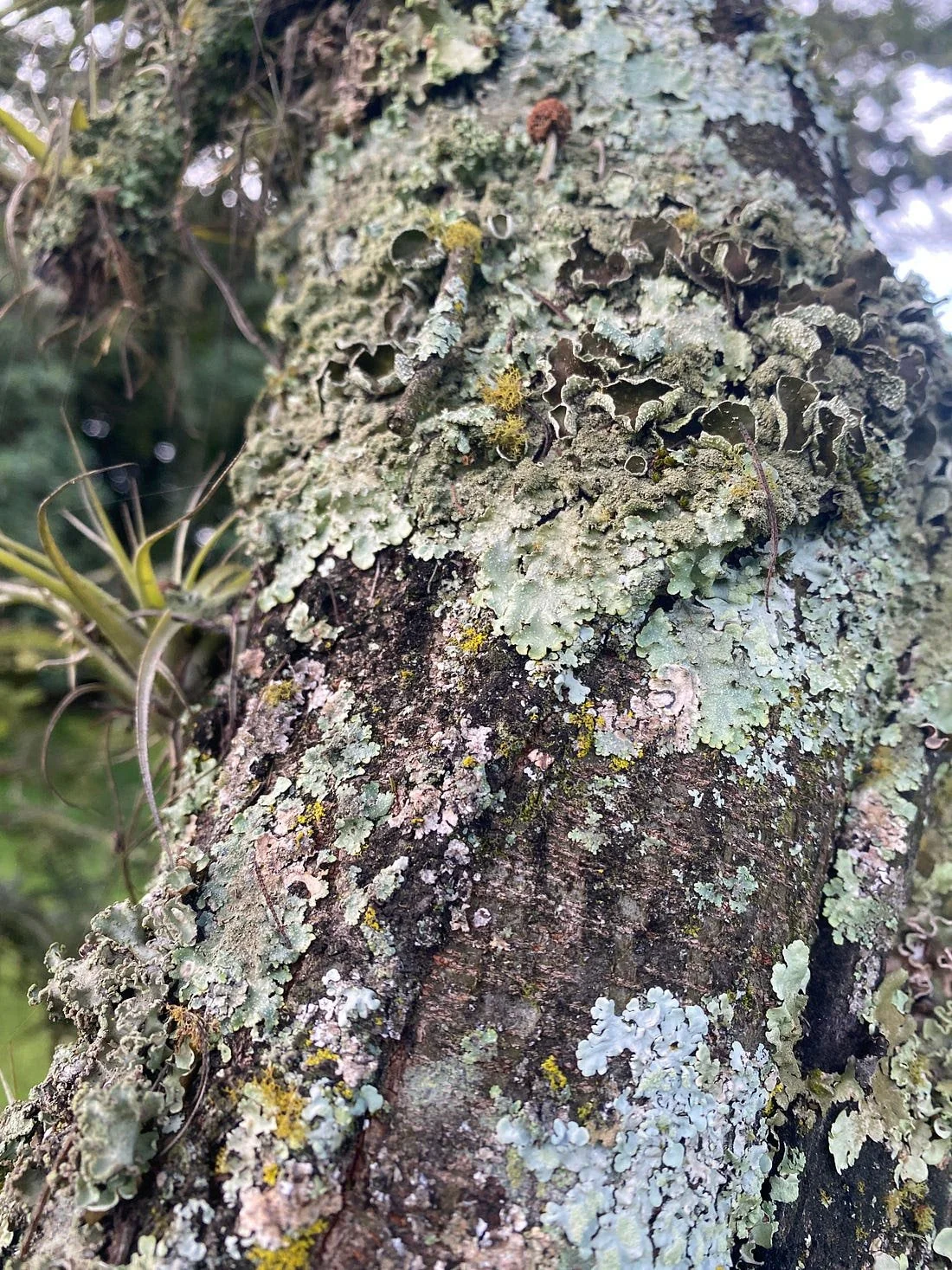
There is a kind of intelligence that does not announce itself. It does not rise above the landscape. It does not demand fertile ground. It doesn’t hurry. It spreads quietly across time and stone.
A lichen is a fungus in intimate relationship with a photosynthesizing partner — either an alga or a cyanobacterium — often accompanied by bacteria and other microorganisms. The fungus offers structure, shelter, and protection from desiccation. The alga offers sugars born of light. Together they form something that behaves like a single organism. But it is not singular. It’s a composite being.
To kneel before lichen is to encounter a body made of negotiations.
This is what I mean by lichen logic.
The fungus cannot photosynthesize. The alga cannot withstand prolonged exposure on its own. Together, they inhabit what neither could survive independently. They create soil from stone. They prepare the way for mosses, grasses, and forests yet to come. They are pioneer species, not through conquest, but through entanglement.
They grow where others cannot, on gravestones, abandoned walls, exposed stone. They do not compete for height or visibility. They definitely don’t rush. In a culture obsessed with scale and spectacle, lichen practices smallness. In a system that prizes individual achievement, lichen models distributed survival.
Their refusal is quiet but radical.
They refuse purity, biologically and conceptually.
They refuse hierarchy as a prerequisite for form.
They refuse the fantasy of the self-made organism. Instead, they offer composite life as the norm rather than the exception.
Lichen Poetry
Below is a poem, written in conversation with lichen — followed by a small field practice for those who would like to explore lichen logic in their own bodies and places. I hope it slows you down and complicates you. May it steady you in the knowledge that even on stone, life is always becoming something.
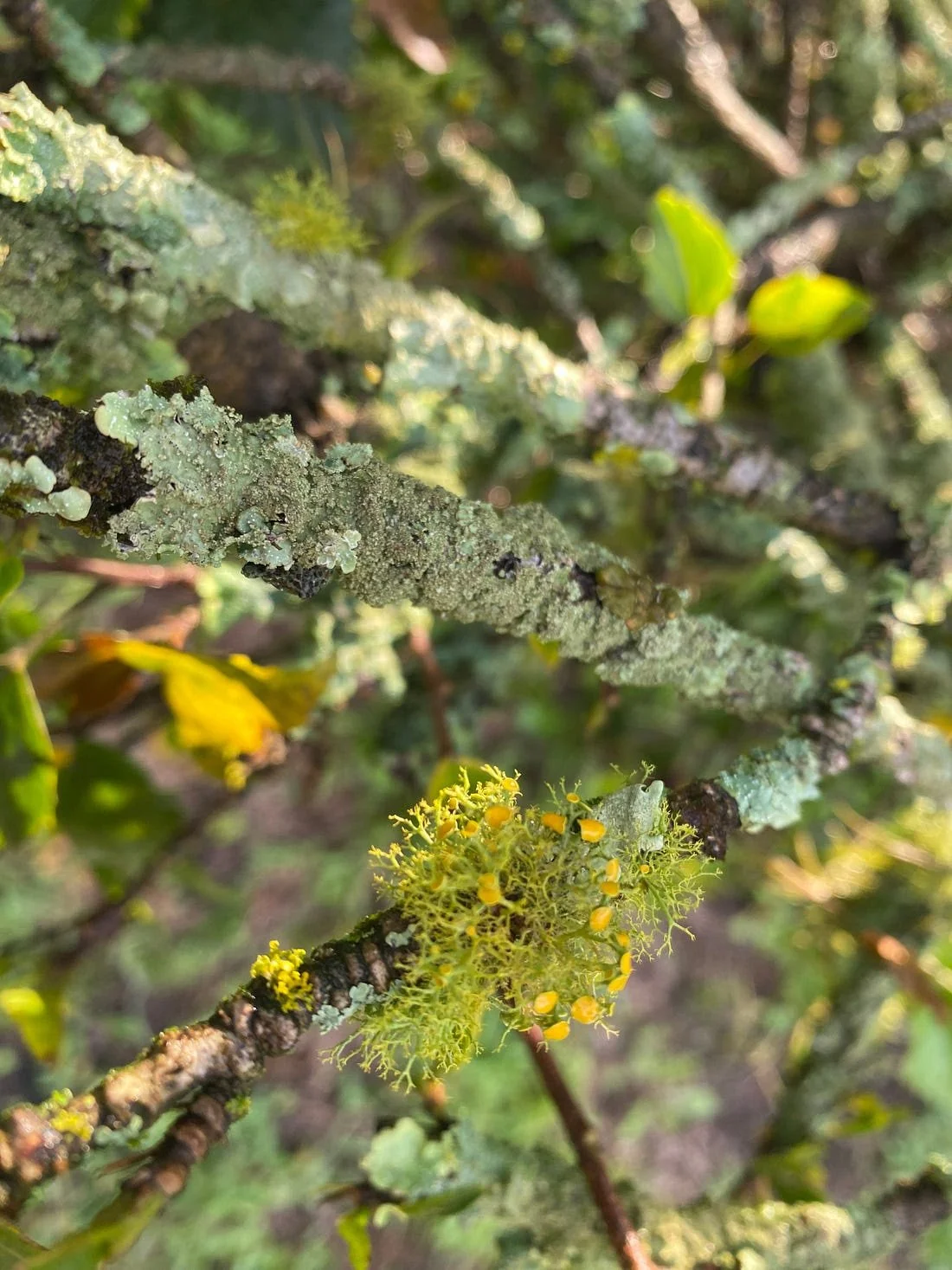
LICHEN / THE ART OF BEING MANY
Born of many, living as one,
She dissolves the myth of separation.
She is a union of worlds;
algae, fungi, bacteria,
three kingdoms living as one.
Lichen thrives where others cannot
in the cracks, the ruins, the hard places;
stone, bone, bark, ruins
turning desolation into possibility.
Teaching resilience without conquest,
belonging without possession.
She whispers:
Survival is shared.
Resilience is relational.
Thriving is a collective act.
She reminds us
that survival is collaborative,
that belonging can take new shapes,
that interdependence
is its own quiet strength.
A symbiosis of patience.
A hymn to adaptability.
A small, steadfast reminder
that we thrive
By holding each other lightly
and growing
Lessons with Lichen
A set of practices for slow attention and composite being
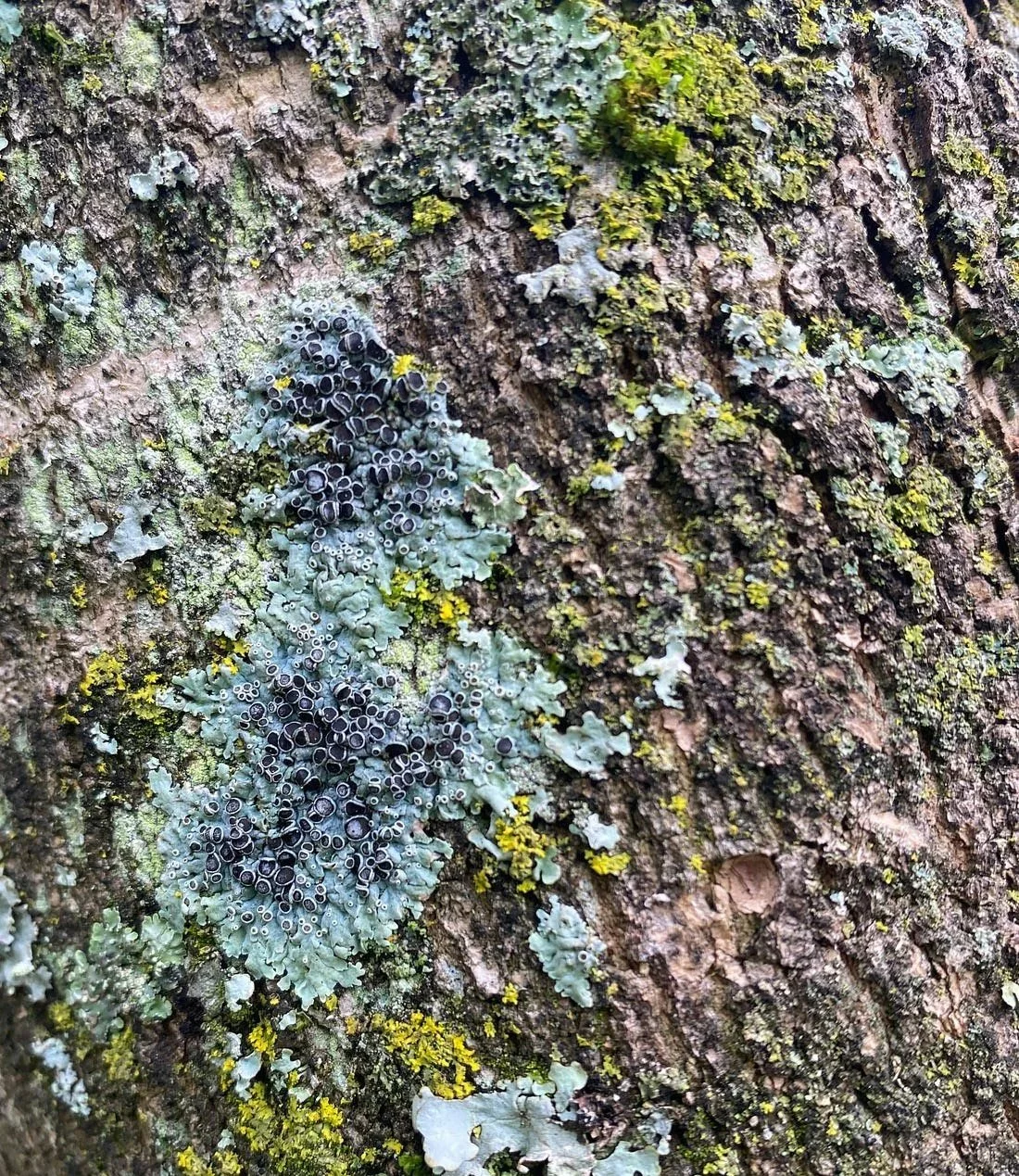
Go to Where Stone Meets Air
Find lichen where it actually lives:
on a rock
on old wood
on a fencepost
on the quiet side of a tree
Let this be small. No pilgrimage required.
This is about proximity, not spectacle.
Practice Low Posture
Physically lower yourself.
Crouch. Sit. Kneel.
Let your body change scale.
Lichens are teachers of humility because they require you to shrink your narrative. They are not dramatic. They are persistent.
Stay for at least five minutes and notice:
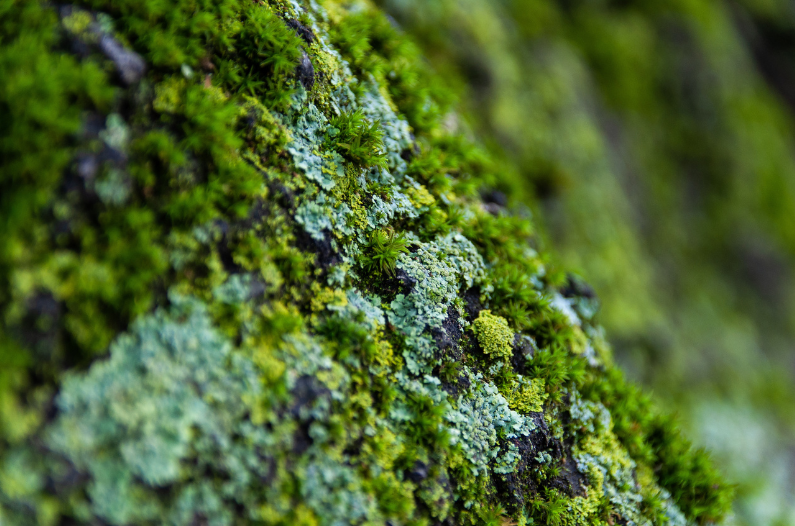
Texture (crust, leaf, branching thread)
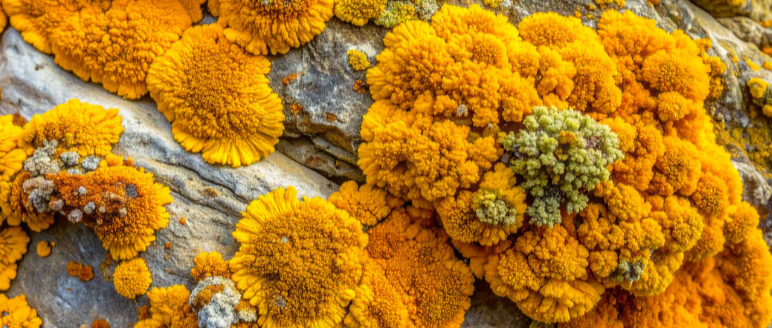
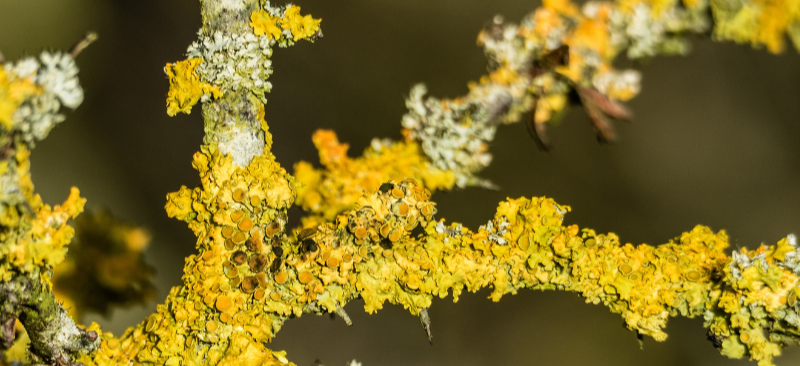
Color (sage, ash, sulfur, rust)
Edges (where one body meets another)
Remember “It” Is More Than One
Remember that“They are not one.”
Let that echo back toward yourself.
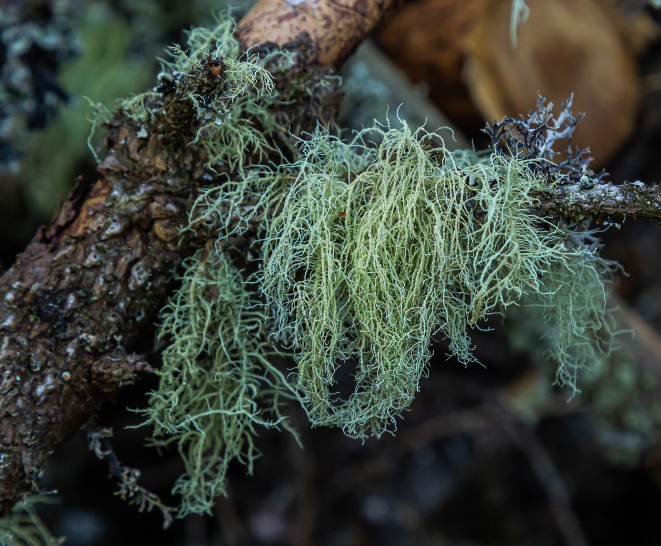
A lichen is fungus and alga and often bacteria —
distinct lineages living as a shared body.
Where in your life are you composite?
Where do you depend on unseen partners?
What parts of you are held together by collaboration?
Refusal Practice
Lichens refuse:
fertile soil
speed
spectacle
singularity
Ask:
What might I refuse today?
What purity myth am I ready to lay down?
Where can collaboration replace the need for singular achievement?
Close with Gratitude
Before you leave, express your gratitude for place and beings.
Lichens build soil.
They make life possible for others.
They are infrastructure disguised as ornament.
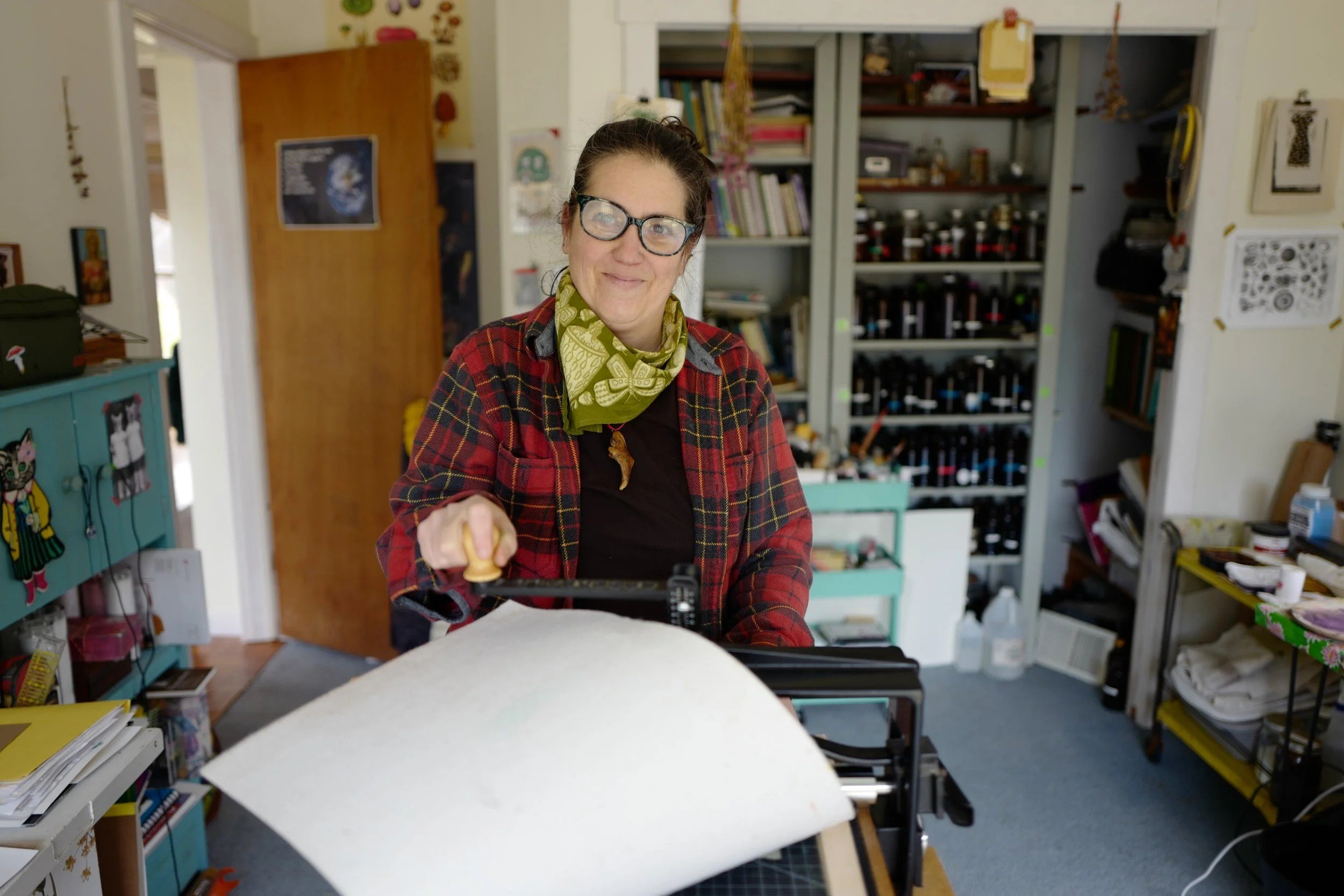
Tonya Lemos is a long-time teacher of herbalism, an artist and teacher of botanical art, and the creator of Art That Breathes https://www.tonyalemosarts.com/
She writes: “My work begins with relationship, an ongoing relationship with the more-than-human world. I am a multidisciplinary artist, and my practice lives at the intersection of art, ecology, and herbalism.
To work with plants is to practice interbeing. Every leaf, root, and petal leaves an imprint, not only on paper or cloth, but in the body, the heart, and the imagination. My practice is a slow conversation, an attunement to the subtle exchanges that occur when we listen deeply. “